
- March 20, 2026
- Admin
- 0
WAS President Tinubu UK VISIT A ROYAL WIN OR A MISSED OPPORTUNITY FOR NIGERIAN BUSINESS?
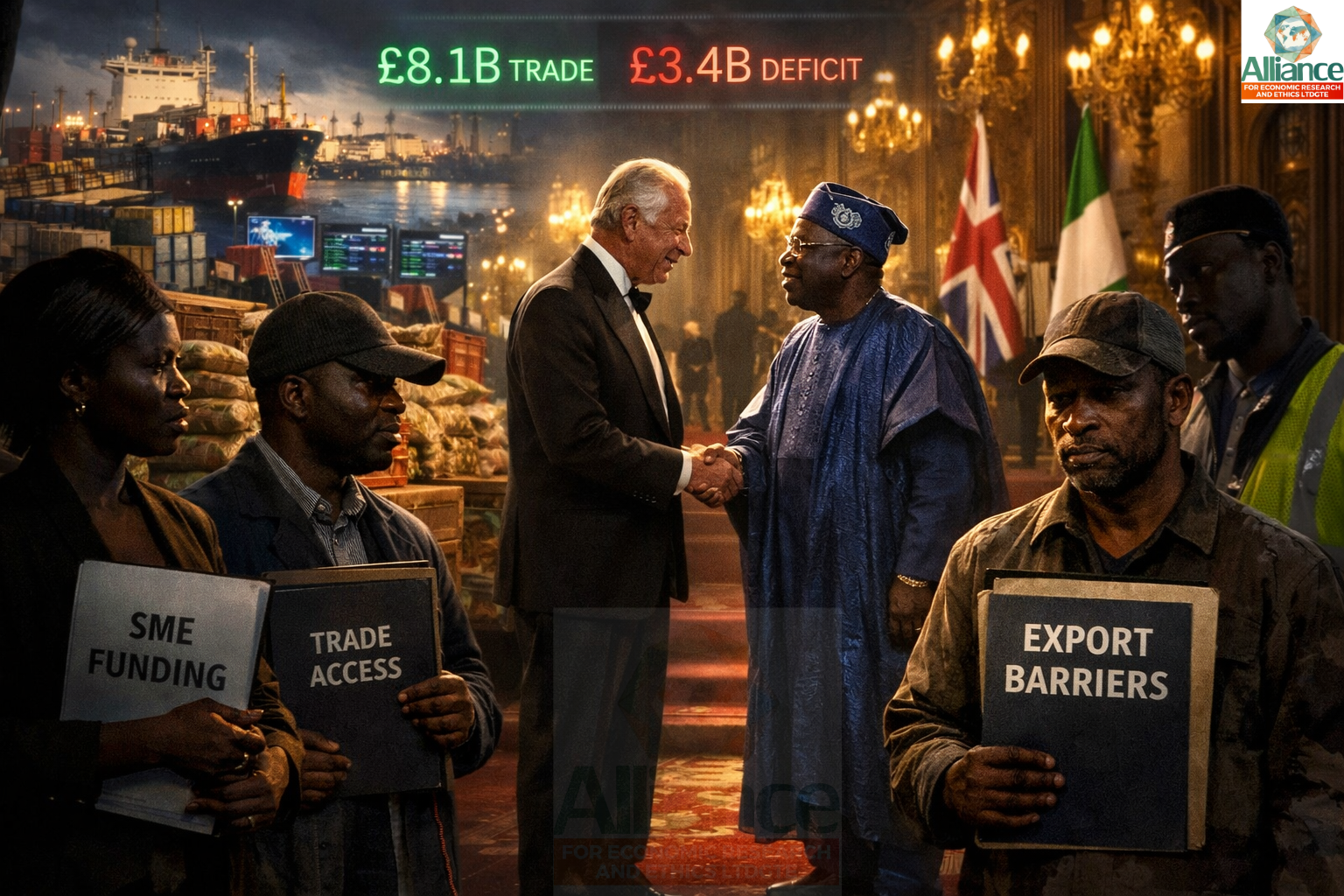
President Bola Ahmed Tinubu’s recent two-day state visit to the United Kingdom the first by a Nigerian leader in 37 years was a masterclass in diplomatic pageantry. With King Charles III rolling out the red carpet at Windsor Castle and toasting to the Nigerian phrase, “Naija No Dey Carry Last,” the optics were undeniably historic. On paper, the numbers are equally impressive. Officials valued the resulting agreements at roughly $1.5 billion, with bilateral trade currently sitting at an all-time high of £8.1 billion annually(Nigeria–UK trade runs a surplus in favour of the UK- £3.4 billion deficit in 2024). From a massive £746 million UK Export Finance package to refurbish the Apapa and Tin Can Island ports, to a $496 million integrated dairy platform to boost local food security, the visit undeniably unlocked a bundle of headline-grabbing wins.
We saw British firms like Wise clearing hurdles for Nigerian licenses, and educational tie-ups bringing digital learning to millions of Lagos pupils. Simultaneously, Nigerian businesses proved their mettle on British soil. Fintech giants like LemFi, Moniepoint, and Kuda Bank announced massive UK expansions, while Zenith Bank proudly opened its Manchester branch, eyeing a 2027 London listing.
Yet, when the royal fanfare fades and the ink on the Memoranda of Understanding dries, a critical question remains: Was this a triumph of government economic diplomacy, or a missed opportunity masked by private sector resilience? A closer examination reveals a troubling reality. Despite the impressive figures, the visit exposed a fundamental misalignment between the President’s rhetoric about economic partnership and the actual prioritization of Nigerian business interests.
The Imbalance: Ceremonial Pomp over Commercial Strategy
The visit was meticulously choreographed for diplomatic theater. President Tinubu’s speeches were steeped in history referencing the Magna Carta, Shakespeare, and Britain’s past influence on Nigerian governance. What was conspicuously absent, however, was a concrete, forward-looking roadmap for transforming this "special relationship" into measurable economic outcomes for Nigerian businesses.
King Charles celebrated Nigerian cultural exports Afrobeats, Nollywood, and sports. Yet, the Nigerian delegation offered no sector-specific targets or direct appeals to British investors beyond general platitudes of "partnership." The rhetoric felt more like a valedictory address than a modern trade mission.
The Business Forums: High Profile, Low Government Presence
The disconnect became glaringly obvious at the business events. The NACCIMA Nigeria-UK Business Forum at Marlborough House, explicitly designed to "unlock investment opportunities," was notably under-attended by senior federal government officials. While Governor Caleb Mutfwang of Plateau State delivered the keynote address, key federal figures including the Minister of Industry, Trade and Investment and the Minister of Agriculture were largely invisible in the business forum coverage. When state governors are more visible than federal trade ministers at an international business summit, it signals a severe lack of coordination and a failure to prioritize trade diplomacy.
Similarly, at the Africa Capital Forum, CBN Governor Yemi Cardoso missed a golden opportunity to pitch specific investment pipelines or announce measures to reduce the cost of doing business for SMEs. Instead, his remarks remained safely anchored in narratives of macroeconomic stabilization and inflation reduction regulatory achievements, certainly, but not the commercial bait needed to hook foreign capital.
The £746 Million Port Deal: Funding Imports, Not Exports
The centerpiece of the visit was the £746 million ports financing agreement, framed as the biggest UK-backed port modernization in Nigeria in 50 years. While vital for easing congestion, we must call it what it is: infrastructure financing that primarily benefits UK contractors. The deal locks in at least £236 million in UK-supplier contracts, including a £70 million order for British Steel. It addresses Nigeria’s import logistics but does nothing to support Nigerian manufacturers accessing UK markets, facilitate SME participation in UK supply chains, or promote the export of the creative industries King Charles so highly praised. It reinforces Nigeria’s role as a market for British goods rather than positioning us as an export powerhouse.
Private Sector Successes: Coincidence, Not Government Facilitation
The expansion of Nigerian banks and fintechs into the UK such as Zenith Bank’s new Manchester branch and LemFi’s £100 million commitment are remarkable achievements. However, these are the fruits of organic private sector dynamism and years of strategic planning by business leaders, not the direct result of presidential diplomacy. The government’s presence at these announcements provided ceremonial value, but offered no tangible trade financing guarantees or bilateral regulatory facilitation.
Furthermore, the visit entirely missed the chance to leverage the UK's massive Nigerian diaspora. With over 500,000 people of Nigerian heritage in the UK sending home over $21 billion annually, the diaspora was celebrated for its cultural impact but ignored as an economic engine. There were no announcements of diaspora bonds, preferential investment windows, or creative industry export support.
The Verdict: A Call for True Economic Diplomacy
When compared to the aggressive, deal-driven state visits executed by nations like India or South Africa which feature concurrent CEO forums, matched government-private sector participation, and real-time trade agreements Nigeria’s approach feels antiquated.
President Tinubu’s UK visit will be remembered for its historical significance, and the $1.5 billion in deals are certainly welcome. However, it represents a squandered opportunity for comprehensive Nigerian business advancement. It confirmed that while the government excels at diplomatic symbolism, it still struggles to effectively facilitate business.
The true test of this visit will not be measured in loans signed with UK Export Finance, but in what happens over the next six months. If Nigerian SMEs do not secure new UK market access, if creative industry exports do not surge, and if agricultural products remain blocked from British shelves, then this historic trip will have been little more than an expensive, beautifully orchestrated photo opportunity.
Nigeria is undeniably open for business, but it is time our diplomatic engagements put Nigerian businesses at home and abroad at the absolute center of the stage. Until then, our state visits will remain celebrations of potential rather than catalysts for prosperity.
The Alliance for Economic Research and Ethics is a non-profit policy research organization dedicated to evidence-based economic governance in Nigeria and Africa.