
- March 9, 2026
- Admin
- 0
WHEN LLOYD'S OF LONDON BECAME THE WORLD'S MOST POWERFUL NAVY-DANGOTE REFINERY TO THE RESCUE FOR NIGERIA.
Everyone thinks the Strait of Hormuz was closed by Iranian missiles.
They're wrong.
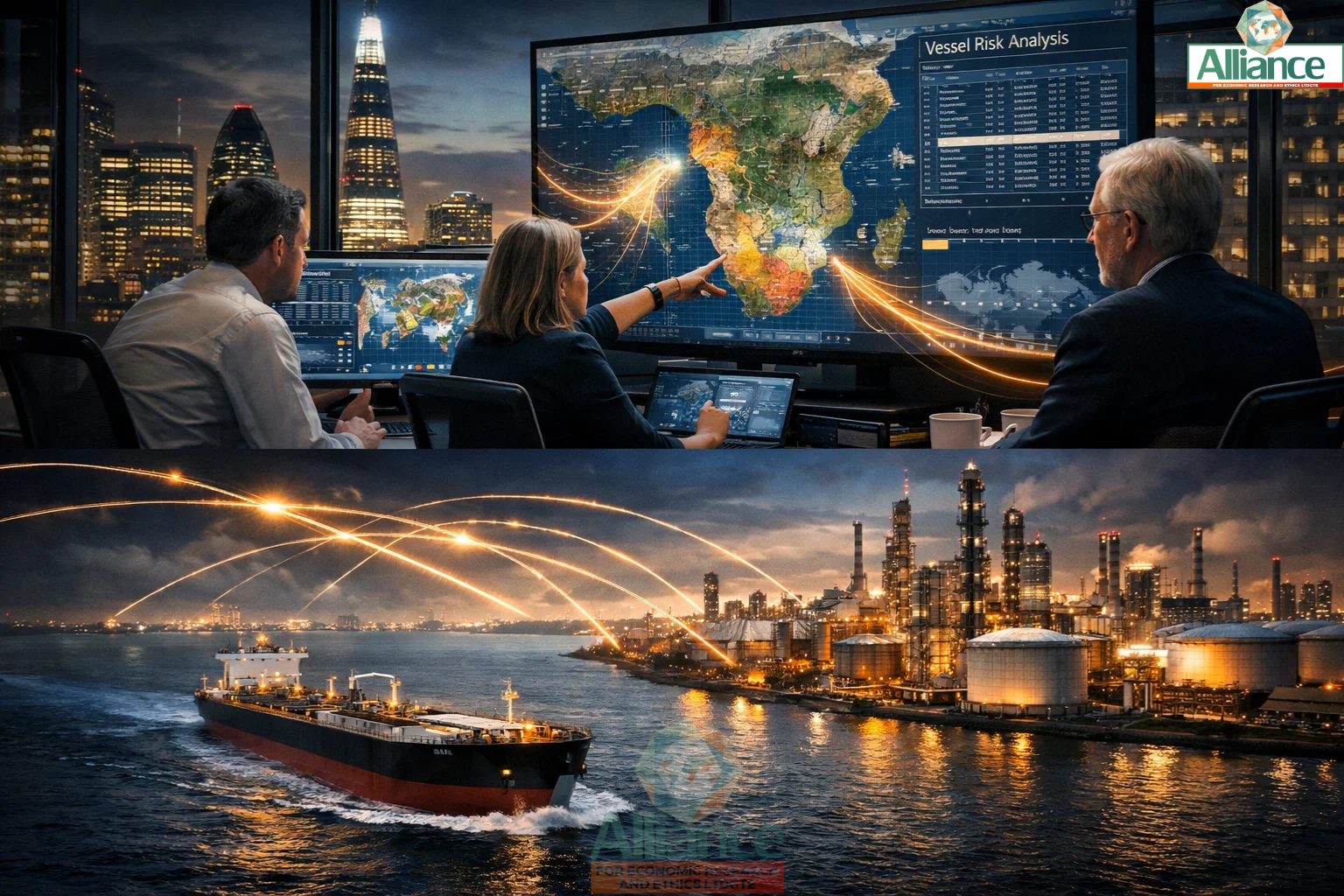
It was closed by an Excel spreadsheet in a London office building.
While the world watched for smoke over Tehran, 12 maritime insurance clubs—controlling 90% of global shipping coverage—quietly downed tools. Reinsurers in London's financial district decided the math didn't work anymore. Risk models flashed red. Spreadsheets auto-populated with the "word" "DECLINED."
Result? An 81% collapse in Hormuz traffic. Not from naval blockades. From actuaries.
Welcome to modern warfare, where the most dangerous weapon isn't a hypersonic missile—it's a "#REF!" error in cell "B47."
The Ghost of Fuel Queues Past
For Nigerians of a certain age, the phrase "fuel scarcity" triggers "PTSD." We've spent decades in biblical queues, jerrycans in hand, negotiating with petrol attendants who suddenly developed mysterious "network problems" whenever prices spiked. We've watched our economy hemorrhage $10 billion dollars annually importing what we literally pump out of the ground.
Then came the cavalry. Or rather, Alh. Aliko Dangote.
The Dangote Refinery—650,000 barrels per day of industrial magnificence—has done something no military alliance could achieve: it has insulated Nigeria from the Hormuz hysteria. While global shipping choked, Nigerian pumps kept flowing. No queues. No panic buying. No "sorry, we only have diesel" signs.
It's the economic equivalent of installing a generator while your neighbours argue about who blew the transformer.
The Refinery That Ate the World
Let's be clear about what Dangote built. This isn't just Africa's largest refinery—it's a $20 billion dollars finger to the global energy establishment. On full operations (and recent reports confirm it hit nameplate capacity in February), it can supply 75 million liters of petrol daily. That's enough to make Nigeria not just self-sufficient, but a net exporter.
The refinery has already slashed petrol imports by 54% year-on-year. It's supplying Ghana, Togo, Cameroon. It's exporting gasoline to the United States—a delicious irony where the world's former refining superpower now buys fuel from Lagos.
But here's where it gets interesting.
The Insurance Squeeze
While Dangote's towers blaze away in Lekki, the global system it depends on is showing cracks. The refinery imports 60% of its crude from the United States—specifically WTI Midland grades that play nicely with its complex refining units. These cargoes don't teleport. They sail. Through waters now deemed "uninsurable" by London's risk models.
When Hormuz traffic collapsed 81%, it wasn't just Iranian oil that froze. It was the entire architecture of global crude logistics. Freight rates for Very Large Crude Carriers spiked 200%. LNG carrier rates exploded 500%. Suddenly, that American crude sailing to Lagos became very expensive bathtub gin.
Dangote has responded with characteristic audacity—raising gantry prices from N774 to N995 per liter, with retail pumps now touching N1,200. The refinery absorbs 20% of cost escalations to "cushion consumers," which is corporate-speak for "we're bleeding money but don't want riots."
The Three-Body Problem
This article isn't all triumphalism. Nigeria faces a geopolitical trilemma:
First, Iran. If Tehran actually closes Hormuz—not through insurance withdrawal, but through mines and missiles—Dangote's crude imports face existential disruption. The refinery needs 13 cargoes monthly from NNPC. It receives five. The balance comes from... well, everywhere. Including places that must sail through troubled waters.
Second, China. Beijing imports 40% of its crude through Hormuz and buys 90% of Iranian exports. If China gets energy-hungry and desperate, it starts bidding up every available barrel not subject to sanctions. Dangote's American crude suddenly looks very attractive to Chinese traders with deeper pockets.
Third, the Gulf itself. Saudi Arabia, UAE, Qatar, Kuwait, Iraq—they're all Hormuz-dependent. If they can't export, they can't earn. If they can't earn, they can't invest. If they can't invest, African refining suddenly becomes the global margin of last resort. Dangote would become not just Nigeria's saviour, but the world's emergency fuel pump.
Will the Insulation Hold?
The critical question: can Dangote's shield survive a prolonged Hormuz closure?
Short answer: "probably." But "probably" is doing heavy lifting.
The refinery has already demonstrated operational resilience—restarting its RFCC unit after maintenance, hitting 90% capacity, stabilizing gasoline production. It has diversified crude sources, though American dependence creates its own vulnerabilities. It has the physical infrastructure to weather storms.
But insurance markets don't care about physical infrastructure. They care about probability distributions. If London decides Nigerian crude imports pose unacceptable transit risks, Dangote could find itself with full tanks and no feedstock.
The irony is exquisite. The same insurance mechanism that closed Hormuz could, theoretically, close Lagos.
The Price of Independence
Nigerians are already feeling the sting. Petrol at N1,200/liter isn't "scarcity"—it's expensive abundance. Diesel at N1,428 is hammering manufacturers who depend on generators. Aviation fuel's 85% price spike threatens to make air travel a luxury reserved for politicians and Instagram influencers.
But consider the alternative. Without Dangote, Nigeria would be competing with Europe and Asia for spot gasoline cargoes at panic premiums. We'd be back to queues. Back to "no fuel" signs. Back to the humiliating paradox of an oil-rich nation begging for refined products.
Instead, we have options. We have leverage. We have—dare we say it—energy sovereignty.
The New Rules of Geopolitics
The Hormuz crisis reveals uncomfortable truths about modern power.
Governments don't control global trade. Risk models do. Presidents can order aircraft carriers to the Gulf, but they can't order Lloyd's of London to underwrite tanker voyages. Generals can plan blockades, but they can't out-calculate an actuary's Monte Carlo simulation.
This is the world Dangote Refinery operates in. It's built the physical infrastructure of independence. But it remains tethered to the financial infrastructure of global capitalism—a system run not from Washington or Tehran, but from London's insurance markets.
The refinery is Nigeria's shield. But shields don't stop arrows; they deflect them. The archers are still out there. And some of them wear spectacles and work in compliance departments.
Conclusion: The Spreadsheet War
As tensions in the Middle East continue, remember this: the next global energy crisis won't announce itself with missile launches. It will arrive as a politely worded email from a reinsurance broker: "Regrettably, we are unable to provide coverage for voyages in your declared region."
Dangote Refinery has given Nigeria something precious—the ability to ignore the first three weeks of any global fuel crisis. But true energy security requires more than domestic refining. It requires either controlling the insurance markets (unlikely), building alternative supply routes (expensive), or developing crude sources that don't require maritime transit (geologically constrained).
For now, we should celebrate what we have: pumps that work, queues that don't exist, and a refinery that has transformed Nigeria from energy beggar to energy banker.
But keep an eye on London. Because while Dangote can refine the oil, he can't insure the ships that bring it. And in the 21st century, the spreadsheet is mightier than the sword.
About the Alliance for Economic Research and Ethics LTD/GTE:
The Alliance for Economic Research and Ethics (AERE) is a think tank dedicated to examining the intersection of global finance, energy security, and ethical policymaking. We believe that understanding modern economics requires studying not just central banks, but insurance markets; not just trade flows, but risk models; not just presidents, but actuaries.