- March 6, 2026
- Admin
- 0
A Historic Opportunity at the Crossroads.
After Three Failed Attempts, March 27 Launch Offers Chance to Get Trade Facilitation Right But Only if Private Sector Takes the Wheel
Nigeria stands on the precipice of a trade revolution. On March 27, 2026, one of Africa's largest economies will launch Phase One of its National Single Window (NSW), a digital platform designed to transform the chaotic landscape of import and export procedures into a seamless, single-portal experience.
For an economy hemorrhaging competitiveness due to bureaucratic red tape, this is momentous. Yet history warns us: this is Nigeria's fourth attempt at implementing a Single Window. The previous three collapsed under the weight of inter-agency rivalry, lack of political will, and institutional resistance.
The stakes could not be higher. The NSW, spearheaded by Director Tola Fakolade at the National Single Window Secretariat, promises to slash cargo clearance times from 18–21 days to under 48 hours, eliminate duplicate documentation, and inject $2–3 billion dollars in private logistics investment over five years.
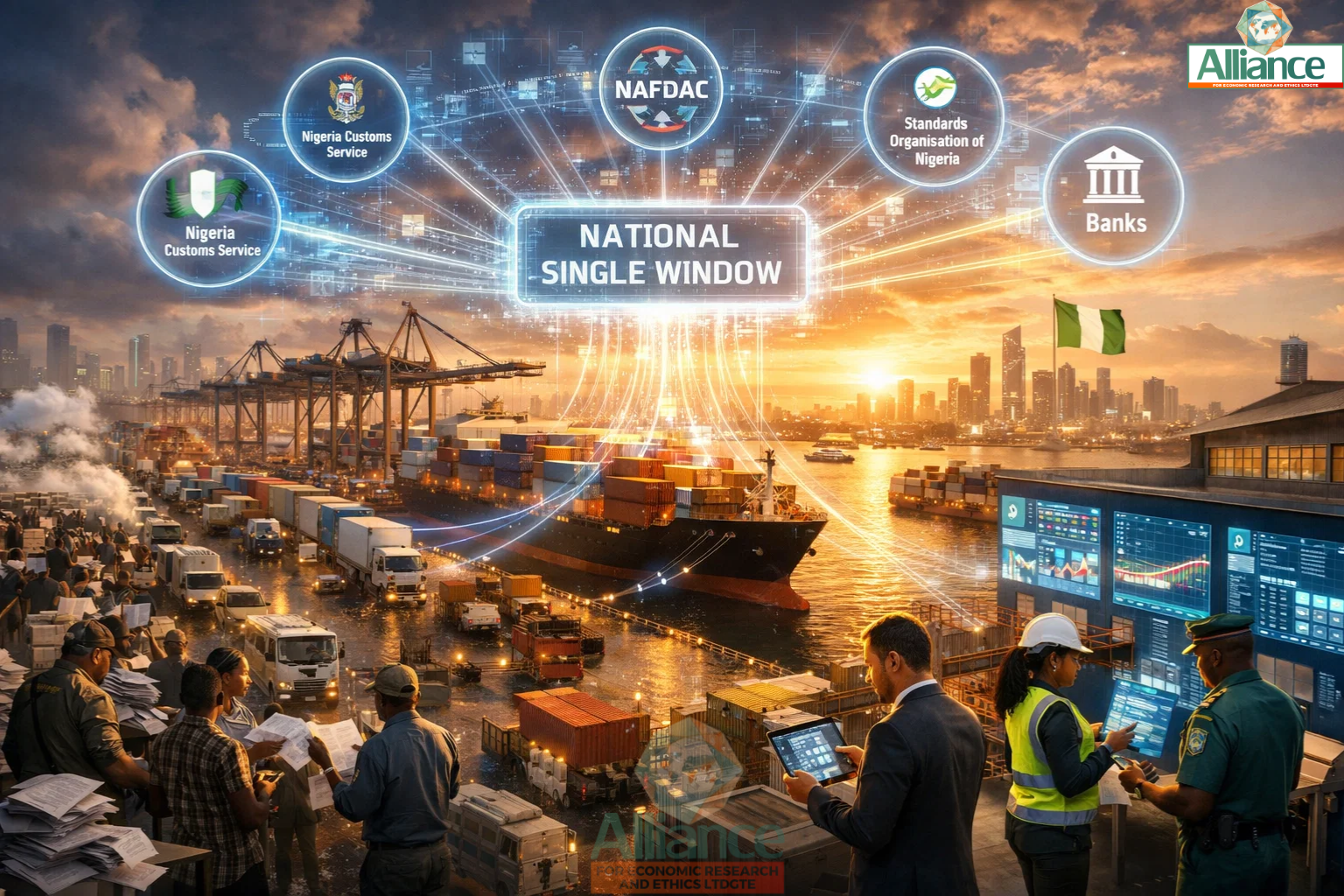
The platform integrates every agency touching trade — Nigeria Customs Service, NAFDAC, Standards Organisation of Nigeria, Nigerian Ports Authority, NIMASA, and the newly empowered Nigeria Revenue Service (NRS) — into one digital ecosystem where traders/users submit documents once, pay online, and track cargo in real time.
But here lies the paradox: Nigeria has chosen to domicile this trade-facilitation tool under its tax authority rather than its trade promotion agency. This makes Nigeria an outlier.
When Singapore pioneered the world's first Single Window in 1989 — TradeNet — it placed it under the Trade Development Board, an economic agency focused on competitiveness, not revenue collection.
Ghana's successful GCNet operates as a Public-Private Partnership with 60% private ownership. Rwanda, while using its Revenue Authority, ensures deep integration with the Rwanda Development Board.
Nigeria's model risks conflating trade facilitation with tax enforcement. The NRS secured legislative backing through the Nigeria Tax Administration Act 2025, embedding the NSW within a fiscal rather than economic framework.
While Dr. Zacch Adedeji's leadership at NRS has driven unprecedented inter-agency collaboration, the question remains: can a tax agency truly prioritize trader convenience over revenue maximization?
When I was National President of NACCIMA, I sounded the alarm. Speaking at the 2024 NEXHUB Export Conference, I appealed to President Bola Tinubu for "increased private sector involvement" and a restructuring of the National Steering Committee to be "more inclusive."
The Organized Private Sector of Nigeria was subsequently invited to constitute a Private Sector Consultative Forum in June 2025.
The National Single Window initiative represents the frontline of trade — freight forwarders, exporters, port operators, banks. Their buy-in is not optional; it is existential.
The global evidence is unambiguous.
Singapore's TradeNet processes 99% of permits within 10 minutes. Rwanda's Single Window saved $18 million annually and reduced import time from 11 days to 1.5 days. Ghana's GCNet cut clearance steps from 12 officers to 3.
These successes share a common thread: private sector leadership or deep partnership.
Nigeria must choose.
Will the NSW be a tool for extracting revenue, or a platform for unleashing trade?
The Alliance for Economic Research and Ethics recommends immediate domiciliation of the NSW at the Nigeria Investment Promotion Commission (NIPC), with NRS as a stakeholder, not leader.
This aligns with global best practice and positions Nigeria as an AfCFTA hub rather than a customs checkpoint.
March 27, 2026 can mark Nigeria's arrival as a trade-friendly nation or merely the fourth chapter in a history of missed opportunities. The difference lies not in the technology, but in who controls it.
Who we are
The Alliance for Economic Research and Ethics (AERE) LTD/GTE is a Nigerian non-profit working to strengthen both the private and public sectors in Nigeria.
It achieves this by conducting independent evidence-based research, advocating for sensible policies, providing regulatory support for businesses, bringing stakeholders together, and promoting transparent ethical reforms to improve Nigeria's Ease of Doing Business.